Friday, 18 January 2013

Feminism


How feminists would see this magazine is in quite a negative manner.
Rihanna is pictured centrally with her back to the camera and staring at the camera with a suggestive look on her face. Her outift is very revealing especially her shorts which leave her on show. This is quite bad for younger kids who look up to people like Rihanna and see this cover on the shelf, and it has the negative connotation of women being sex objects which feminists have worked out to 'stamp out' in pop culture today.
This magazine cover can be compared with the above image of Beth Ditto's NME cover. This shows her in an extremely unflattering manner, wearing no clothes with her back turned and covering her breast with just her hand covering her breast. This cover connotes how Beth Ditto is comfortable with how she looks and doesn't care about what she likes, leading feminists to most likely positively receive this cover because of it's message to insecure younger girls.

Wednesday, 16 January 2013

Questionnaire

Please answer this questionnaire here

NME Institution Research

In lesson we have watched The NME Story along with researching NME and this is what I've found out:

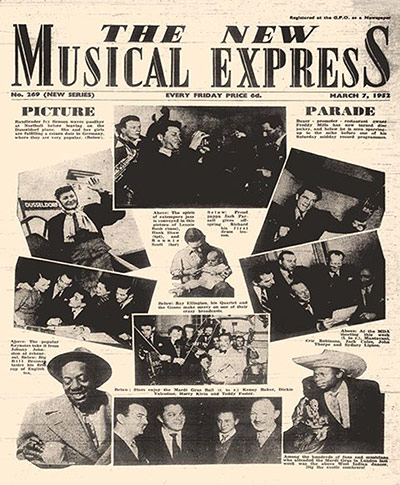
NME first started in March 1952, as 'The New Musical Express'. It was known for being printed on newsprint instead of glossy paper which was the norm for magazines. 

Similar to the the US magazine Billboard, in each issue it had the UK's weekly singles chart and was the first magazine to do so. The first No. 1 it had was "Here In My Heart" by Al Martino.
The magazine was very successful in the early 1960s under the editor Andy Gray, achieving 300,000+ figures during a 4 month period in 1964. Even during the psychedelic period of the late 1960s NME kept it's status as one of the UK's best selling music magazines.

As the 1970s arrived the magazine wasn't selling as many with rival Melody Maker overtaking it, which almost led to it's closure by owners IPC Media. Alan Smith was then made editor and turned the magazine into a new cynical style hiring new writers. He gave the editorial role to Nick Logan as the magazine started selling almost 300,000 copies a week outselling all of it's rivals.
Punk started to gain momentum in the late 1970s and this led to a more openly-political NME under Neil Spencer. The iconic logo which it still uses to this day in a modern form was brought in at this point.

The 1980s continued this trend, even having then Labour leader Neil Kinnock on the cover in 1985 and going as far as an interview with him in 1987. But hip-hop acts such as Public Enemy started to gain popularity with NME controversially covering them in the magazine leading to a rough patch of sales. Because of this decline Alan Lewis, who was a former editor of Sounds got brought in to save it. After a slow start this eventually proved to be a good decision and a commercial success.
Danny Kelly was made the new editor at the end of the 80s as Acid House and 'Madchester' both got popular.

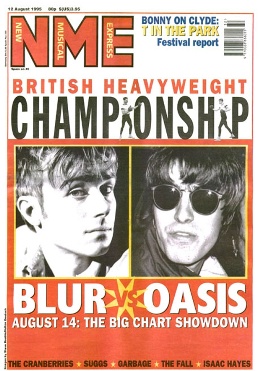
The early 1990s in NME had a large Alternative Rock influence from the USA with bands like Nirvana and Pearl Jam gaining much coverage. These and other American bands dominated the magazine over British ones, who still got some support. One noteworthy British band in this time is Manic Street Preachers who had a rivalry with the magazine. During this period artist Morrissey was featured on a lot of covers of the magazine, and eventually had a well-publicised dispute with the magazine after their allegations of racist lyrics in his music. He only eventually spoke to NME again in 1993 because the three writers involved then had left. When Steve Sutherland was made editor, a lot of the writers defected to sound and the British media started to be dominated by Britpop, two notable bands being Blur and Oasis. This was a new high for the paper who took part in publicising the chart battles, but as Britpop died so did the magazine's popularity going into the 21st century, with the late 1990s containing the magazine's ill-fated attempts of covering DJ's and trying politics again.

Long rivals Melody Maker was merged with NME in the 2000s, and the new editor became Ben Knowles. Gone was the old newsprint style and a more conventional glossy and colourful paper has been used. It attempted to gain new audiences by covering artists of different genres like Jay-Z and Aphex Twin but yet again this was unpopular. They brought in a new editor in Conor McNicholas and started covering British indie bands like the Kaiser Chiefs. Popular band Arctic Monkeys then became the main band covered by the magazine in the early 2000s. The magazine was criticised for it's lack of diversity in 2008, and it got redesigned to be aimed at an older audience.
Despite this, the circulation for the magazine has been getting lower every year to the present day, with Mike Williams the current editor.

Even though it isn't selling as many copies and nowhere near as popular as it used to be, NME has still been a hugely influential magazine and the legacy of it during it's high points definitely overshadow the recent demise. 

Tuesday, 30 October 2012

Analysis of a front cover of a magazine


 The cover I have chosen to analyse is an issue of Q Magazine, which is from October 2010.

The image represent different audiences as it promimently features different artists from various genres (Jay-Z - rap, Lady Gaga - pop and Dave Grohl - rock)
All three of them are very influential in their respective genres

Articles on the three cover stars advertised with quotes -->        

The price of the magazine is £3.99, as it is a well known magazine with a lot of content in it supposed to last a whole month.

The font choice attracts buyers due it being iconic, with the magazine keeping it largely the same for a long time.

Looking at this magazine informs my choices for my own magazine by:
  • I'll try and reach out to bigger audiences and not just focus on one
  • Use a style and font recognisable but not so much it'll be considered plagarism
  • Have a quote from articles
 

Genres of Music

The genre of music I will be focusing on for my coursework is Rap.

Rap music, more broadly known as hip-hop originated in New York City during the 1970s when street (or 'block') parties where prominent. It was called the 'voice' for the African-American youth in the lower classes in America with the music said to be reflective of the trouble in their lives involving money, society and the government.

A rap song usually consists of the artist speaks lyrically (with their 'flow' being the rhythm and rhymes heard on their delivery of their lines) over a 4/4 beat. The beat is usually sampled and synthesisers or drum machines can be used.

The examples of rap artists out there is very vast, with various sub-genres spinning off. Here are some examples:

Dr. Dre, Tupac, N.W.A. are all classic examples of West Coast hip-hop, with East Coast hip-hop artists being the likes of Jay-Z, Nas and the Wu-Tang Clan.


 The most popular Rap magazine is XXL with other popular ones being Vibe and The Source.

Here is a music video of a modern rap song from 2012


Mercy - Kanye West (feat. Big Sean, Pusha T and 2 Chainz)

Wednesday, 3 October 2012

Magazine Terminology

House Style - A magazine's distinctive design that distinguishes it from it's competitors

Masthead - Name of the Magazine

Lead - The introductory paragraph of an article. Usually written in bold or capitals.

Pugs - Placed at the top left and right hand corners of the paper and are known as the 'ears' of the page. The price of the paper, the logo or a promotion are often positioned there.

Slogan - A motto

Sell Lines - Text on the cover that helps to sell the magazine to the audience

Headline - Main Story in the magazine

Buzz Words - "Wow", "Exclusive", "Free" are all examples of this.

Caption - Description of an image

Anchorage Text - The way in which text helps to pin down the meaning of a picture and vice versa

Puffs - Colourful boxes promoting features inside the magazine

Strap Line - Memorable phrase that is recognisable to a brand

Drop Capitals - Really big letter, which start of an article

Banner - Text, which stands out because it's on a coloured background

Copy - The main text